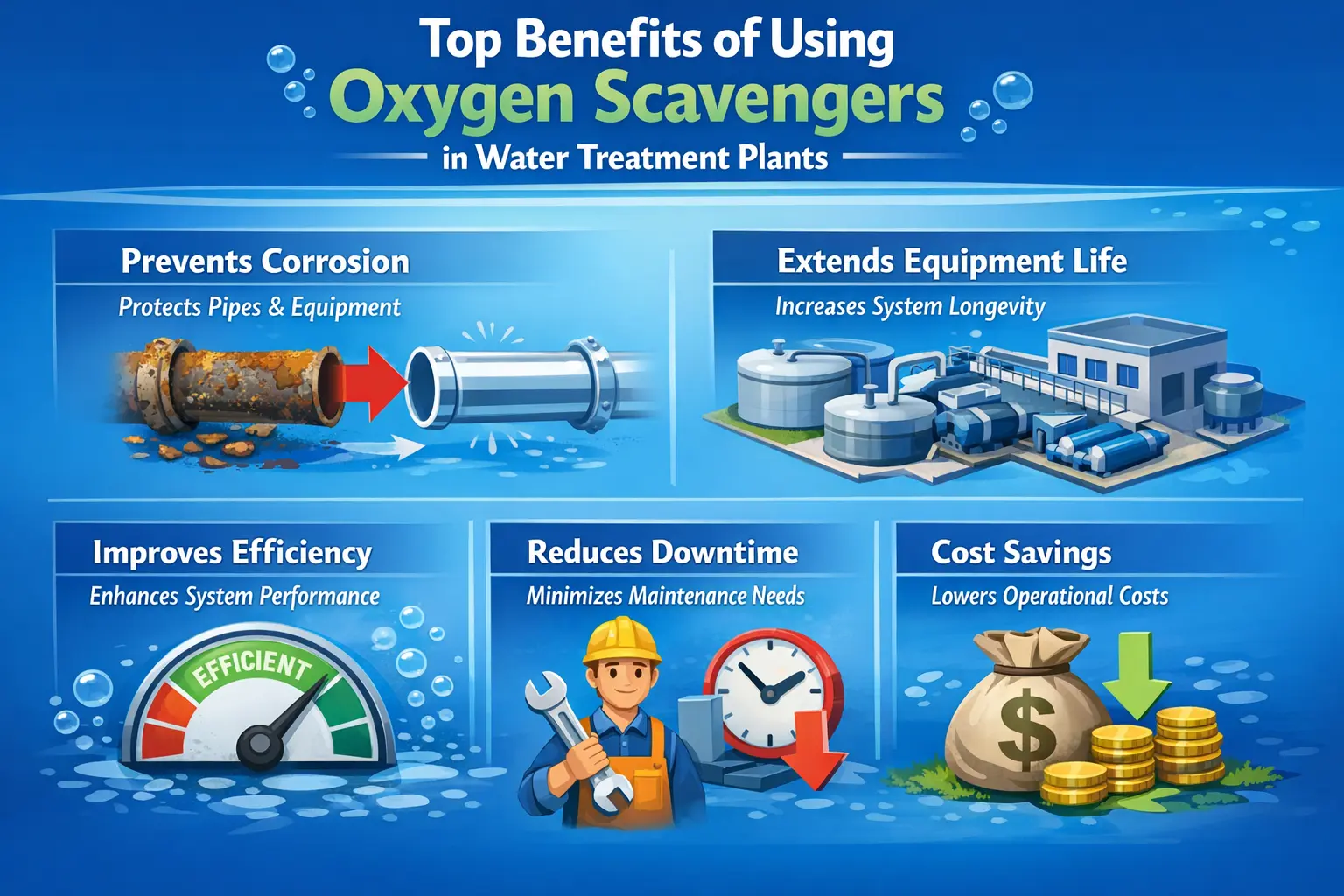
Top Benefits of Using Oxygen Scavengers in Water Treatment Plants
Table of Contents
Introduction
What Are Oxygen Scavengers?
Enhances Boiler Efficiency and Performance
Improves Overall Water Quality
Reduces Maintenance and Operational Costs
Helps Maintain System Integrity and Safety
Suitable for a Wide Range of Industries
Easy to Use and Integrate into Existing Systems
Conclusion
Introduction
In any water treatment system—whether it’s a boiler, cooling tower, or industrial process plant—dissolved oxygen is one of the biggest hidden threats. Even small amounts of oxygen in water can trigger corrosion, scale formation, equipment damage, and costly downtime. This is where oxygen scavengers play a critical role. These specialized chemicals remove dissolved oxygen from water, ensuring smooth, safe, and efficient operations across various industries.
In this blog, we explore the top benefits of using oxygen scavengers in water treatment plants and why they are essential for long-term system performance.
What Are Oxygen Scavengers?
Oxygen scavengers are chemicals formulated to react with dissolved oxygen in water and convert it into harmless compounds. By doing so, they prevent oxygen from corroding metal surfaces, damaging equipment, and reducing system life.
Common types of oxygen scavengers include:
Sodium sulfite
Hydrazine and its alternatives
DEHA (Diethylhydroxylamine)
Carbohydrazide
Ascorbic acid
Organic scavengers for food-grade applications
Each type is selected based on the application, temperature, system design, and regulatory requirements.
1. Prevents Corrosion in Water Systems
Corrosion is one of the most severe problems caused by dissolved oxygen. When oxygen reacts with metal surfaces, it forms rust and weakens piping, tanks, and equipment.
How Oxygen Scavengers Help
Oxygen scavengers react with dissolved oxygen before it comes in contact with metal, forming stable compounds like sulfate, water, or organic complexes. This protective action:
Prevents rust formation
Reduces pitting corrosion
Protects boilers, heat exchangers, and cooling systems
Extends the life of pipelines and equipment
For industries like power plants, sugar mills, textiles, and pharmaceuticals, corrosion prevention is not just beneficial—it’s essential.
2. Enhances Boiler Efficiency and Performance
Boiler systems operate under high temperature and pressure, making them more vulnerable to oxygen attack. Even trace oxygen levels can cause rapid corrosion and tube failures.
Why Oxygen Scavengers Are Important in Boilers
They eliminate dissolved oxygen, ensuring the feedwater remains chemically stable.
Reduce the risk of boiler tube leaks.
Maintain steam purity and improve heat transfer efficiency.
Lower maintenance and repair costs.
Many industries use oxygen scavengers as a part of their boiler water treatment program to ensure uninterrupted steam generation and operational reliability.
3. Improves Overall Water Quality
Oxygen scavengers not only protect equipment but also enhance overall water quality within the system. By removing oxygen, they stabilize water chemistry and prevent reactions that lead to unwanted byproducts.
Benefits to Water Quality
Lower turbidity
Reduced presence of corrosion byproducts
Cleaner water for heat exchange and recirculation
Improved clarity and system hygiene
This is especially valuable in cooling water circuits, industrial process water, and closed-loop systems.
4. Reduces Maintenance and Operational Costs
Corrosion-related failures can be extremely expensive. Replacing damaged pipes, cleaning heat exchangers, or shutting down boilers affects production and profitability.
How Oxygen Scavengers Reduce Costs
Minimize equipment downtime
Reduce frequency of repairs and part replacements
Lower energy losses from inefficient heat transfer
Improve system longevity, delaying capital investment
In the long run, the cost of oxygen scavengers is much lower compared to the cost of corrosion damage.
5. Helps Maintain System Integrity and Safety
A well-maintained water treatment system ensures safe plant operation. Corroded equipment poses risks such as leaks, contamination, and unexpected failures.
Safety Advantages
Prevent accidents caused by pipe bursts or boiler tube failures
Maintain consistent water chemistry for safe equipment operation
Protect workers and ensure compliance with safety regulations
Oxygen scavengers play a vital role in keeping industrial systems stable and safe throughout their operating life.
6. Suitable for a Wide Range of Industries
One of the biggest advantages of oxygen scavengers is their versatility. They are used across various industries that depend on corrosion-free operations and clean water systems.
Industries That Commonly Use Oxygen Scavengers
Power plant
Sugar mills and distilleries
Food and beverage processing
Pharmaceutical manufacturing
Petrochemical and refinery operations
Paper and pulp mills
Textile processing
Each industry may require a different grade or formulation, but the core benefit remains the same—protection from oxygen-related damage.
7. Easy to Use and Integrate into Existing Systems
Modern oxygen scavengers are designed for easy application. Whether manually dosed or added through automated systems, they quickly blend with water and start reacting with oxygen.
Ease-of-Use Benefits
Can be added directly to feedwater tanks or dosing pumps
Work efficiently even at low concentrations
Compatible with other treatment chemicals
Provide quick results with minimal monitoring
This makes them a practical solution for plants of all sizes.
Conclusion
Oxygen scavengers are essential for maintaining the health and efficiency of water treatment systems. By removing dissolved oxygen, they prevent corrosion, improve water quality, reduce maintenance costs, enhance boiler performance, and protect overall system integrity. Whether your plant operates boilers, cooling towers, or closed-loop systems, using the right oxygen scavenger ensures long-term reliability and improved operational performance.
Ms. Deepali serves as the CEO of Guruchem Enterprises, a leading Maharashtra-based company specializing in industrial and specialty chemicals. She also leads Gurupharma Chemical Industries, a manufacturing firm focused on producing high-performance specialty chemicals widely used in the sugar and ethanol industries.
Serving diverse sectors including sugar mills, distilleries, power plants, and allied industries, Guruchem Enterprises is known for providing high-performance, sustainable chemical solutions. Driven by a strong focus on research, innovation, and quality, the company remains dedicated to addressing the evolving needs of its clients. Ms. Deepali oversees accounts, audit, and administration, while also playing a key role in strategic growth and operational excellence.
Arjun Kawade
CEO – Guruchem Technologies
Arjun is a CEO of Guruchem Technologies, is a highly accomplished Chemical Engineer and Environmental Specialist with more than 25 years of extensive experience in the industry.
Arjun, established the company with a mission to enhance and modernize scientific infrastructure across India. Under his leadership, Guruchem Technologies has become a trusted name in supplying laboratory apparatus, instruments, furniture, and equipment to colleges, industries, and educational institutions. The company also specializes in delivering high-quality laboratory chemicals to research and academic laboratories.